Aeron’s posthumous heroic legend
The Ballad of the Last DragonAeron’s posthumous heroic legend is the constructed reputation that turns Aeron Fowler into Sir Aeron, the apparent slayer of the last dragon. It arises from a necessary lie about his death, but it is not merely deception: through the dragon ballad, repeated performances, preserved equipment, and the emotional response of listeners, the legend gives Aeron a lasting place in history and allows his companions to make a final farewell without surrendering him to silence.
Origin in Concealment
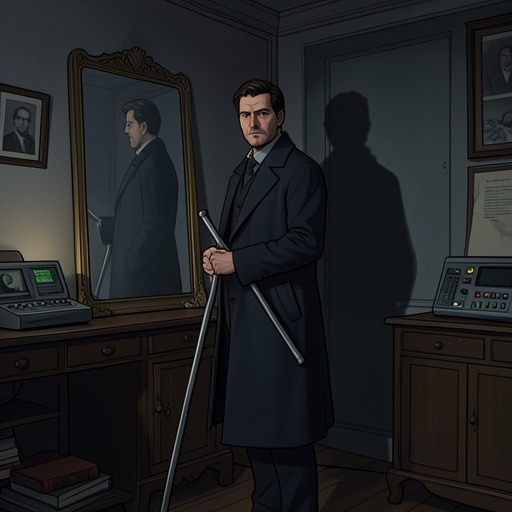
The legend begins at the Dragon’s Cave, where Sylvaine Abelan and the surviving members of Aeron Fowler’s expedition discover the truth behind the supposed dragon. The cave contains the furnishings and mechanisms of the figure who called himself The Dragon, but the group hides that evidence behind rubble and fallen rock. They also burn Aeron’s map and Sylvaine’s translations so that future seekers will find only a corpse-eaters’ nest and a destroyed cave. The physical destruction of the site is therefore also an attempt to control the story attached to it.
The public account substitutes a heroic death for the concealed reality. Sylvaine and the others claim that Aeron felled the dragon with his blade, that the enormous body brought the cave down, and that Aeron received his own mortal wound while delivering the killing blow. In this version, the party robbed the dragon’s hoard before the beast awoke, barely escaped the collapsing cave, and carried the brave, dying Aeron into the open air so that he could see the sky one final time. The account preserves the shape of a traditional heroic quest even though the dragon was not defeated in the way the tale declares.
The lie has material reminders. The dragon tooth remains in Sylvaine’s satchel, sharp enough to jab her thigh as she travels, while the buried furnishings and mechanisms remain inaccessible evidence of the hidden truth. These objects make the legend unstable: the public story speaks of a slain monster, whereas the survivors carry fragments of a different history. Sylvaine initially accepts the lie as a practical necessity, but guilt eventually gnaws at her, especially as exhaustion, hunger, and the reality of Aeron’s death settle over her. Her hope that immortalizing his name will make the deception worthwhile defines the moral bargain at the center of the legend.
Making Aeron a Hero
The legend becomes durable through performance. Sylvaine recognizes that the story of Aeron facing the dragon must be presented with every available advantage if it is to captivate audiences and keep his memory alive. Jaromir’s handmade lute becomes part of that effort. He makes it from memories of watching Sylvaine play, and she calls it perfect because it enables her to carve Aeron’s lasting legacy through music. The instrument is not simply a replacement for her earlier lute; it is a crafted vehicle for converting private grief and compromised truth into public memory.
Sylvaine understands that stories possess power in their telling. The legend therefore depends less on a fixed record than on repetition, voice, tune, and the audience’s willingness to receive the performance. Jaromir observes that the story of Aeron’s fate has been altered by the tales Sylvaine spun, acknowledging both her creative agency and the cost of that transformation. The altered narrative grants Aeron the identity of a dragon-slaying hero, but it also leaves the survivors conscious that their own fates cannot be changed with equal ease.
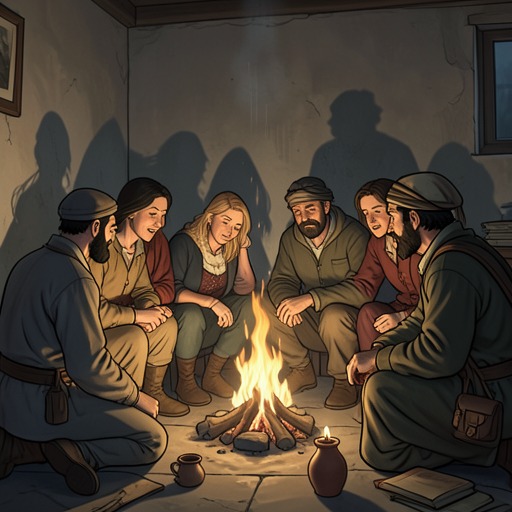
The ballad is performed throughout the journey, in taverns, inns, and at campfires, until it becomes a familiar tune carried from place to place. Its recurrence gradually separates Aeron’s public identity from the hidden circumstances of his death. Each performance gives listeners a version of Aeron that is larger, cleaner, and more legible than the complicated truth known by the expedition. His heroic reputation is thus made collectively: Sylvaine sings, Jaromir supports the performance, and audiences complete the process by listening, remembering, and eventually singing along.
The Final Performance
Astervale provides the legend with its concluding public setting. The tavern is the group’s last stop and their last opportunity to spread word of Aeron and leave their own mark on history. It is also the place Aeron reached earlier, so returning there brings the expedition full circle. Cadoc, Neith, and Jaromir watch Sylvaine from the central table with reassuring expressions while she recognizes that the group has done right by Aeron. Their repeated words and memories have kept him alive enough that the performance can function as the true goodbye.
The changing season gives the scene a quiet temporal frame. The red banners and yellow ribbons associated with First Fruits Day have disappeared; burgundy fabric, pumpkins, and gourds now announce the approaching Harvest Day. The tavern’s shift from summer celebration toward autumn does not make the event purely elegiac. Warm fires, flowing drinks, and a generous sense of belonging place Aeron’s remembrance within communal life, suggesting that his story will continue not in the sealed cave but among ordinary people gathered together.
Sylvaine begins the familiar tune, the one played in every tavern and every private lodging, and names it the ballad of the last dragon and the ballad of Sir Aeron. The title condenses the entire transformation. Aeron is no longer present as the expedition’s companion, but he is present as a role, a melody, and a narrative identity. The audience’s tears and participation demonstrate that the legend has achieved its immediate purpose: the listeners believe in, or at least emotionally accept, the heroic form of Aeron’s story.
When the ballad ends, Sylvaine experiences both buoyancy and grief. The performance is finished, and so is the campaign to establish Aeron’s name, yet the emotional response of the crowd confirms that the campaign succeeded. Jaromir places an arm around her shoulder and kisses her forehead, linking the public completion of Aeron’s memorial to the private bond that sustained its creation. The farewell is framed instead as a promise of continued remembrance, so the ending closes the performance while refusing to make Aeron’s presence simply disappear.
Objects and Public Memory
Aeron’s chest plate becomes the most visible physical emblem of the legend. In the tavern, Neith announces that the barkeep is putting it up, and the armor is hammered into place on the wall. The group falls silent before the final piece of Aeron displayed there: a bright, gleaming chest plate marked by scorch marks and tarnished by the road. Its damage preserves the material traces of danger even as the accompanying story reshapes what that danger means.
The question of whether the chest plate should have been polished reveals a tension within the memorial. Polishing would make the object more presentable, but the scorch marks and road tarnish are precisely what connect it to Aeron’s journey. The unidealized armor allows the legend to remain attached to hardship rather than turning him into an immaculate emblem. It also places an artifact of the absent man in a public room where strangers can see it, making remembrance part of the tavern’s physical landscape.
The chest plate, the dragon tooth, and the handmade lute perform different kinds of memorial work. The tooth preserves the danger and the secret; the armor offers a visible relic of the supposed hero; the lute gives the story motion through sound. Together they show how Aeron’s posthumous reputation is assembled from fragments rather than recovered as a complete historical truth. The legend is strongest when these fragments are arranged into a coherent tale, but their very incompleteness keeps the hidden cost of that coherence present.
Meaning and Limits of the Legend
Aeron’s heroic reputation offers the survivors a way to convert an unjust and painful death into an enduring narrative. The group did not lose him to the dragon in the literal circumstances claimed by the ballad, yet they carried him with them each day through words and memories. The legend therefore serves as a portable memorial: it travels through the settlements, survives the destruction of the cave, and reaches people who never knew Aeron personally.
Its power is inseparable from its falsity. The story makes Aeron easier to honor because it supplies a recognizable heroic pattern—quest, dragon, killing blow, mortal sacrifice, and final escape—while concealing the moral ugliness of the figure who called himself The Dragon. Sylvaine’s guilt prevents the legend from becoming uncomplicated triumph. She knows that preserving Aeron’s name required confiscating evidence, burning records, and inventing circumstances that never occurred exactly as told. The narrative’s emotional truth and factual distortion remain in conflict rather than resolving into one another.
The legend also changes the meaning of authorship. Sylvaine is not merely reporting Aeron’s fate; she is actively shaping what the world will remember. Her performances make Aeron’s afterlife dependent on an ongoing act of interpretation, while the listeners’ tears and shared singing make that interpretation communal. The final work titled Aeron’s Ballad crystallizes this process: the man’s name is separated into song, and song allows his absence to become a continuing presence.
Aeron’s posthumous heroic legend consequently functions as both memorial and ethical compromise. It cannot restore Aeron, reveal the buried truth without consequence, or remove the survivors’ guilt. It can, however, prevent his death from being reduced to an unmarked loss. By the end of the campaign, Aeron has become the Sir Aeron of public song, a dragon-slayer remembered in taverns and represented by armor on a wall. His immortality is not the immortality of literal history but of repeated storytelling, sustained by those who loved him and by audiences willing to carry the tale onward.